May 24, 2026
CHOOSING THE RIGHT BRASS ALLOY FOR INDUSTRIAL AND PLUMBING APPLICATIONS
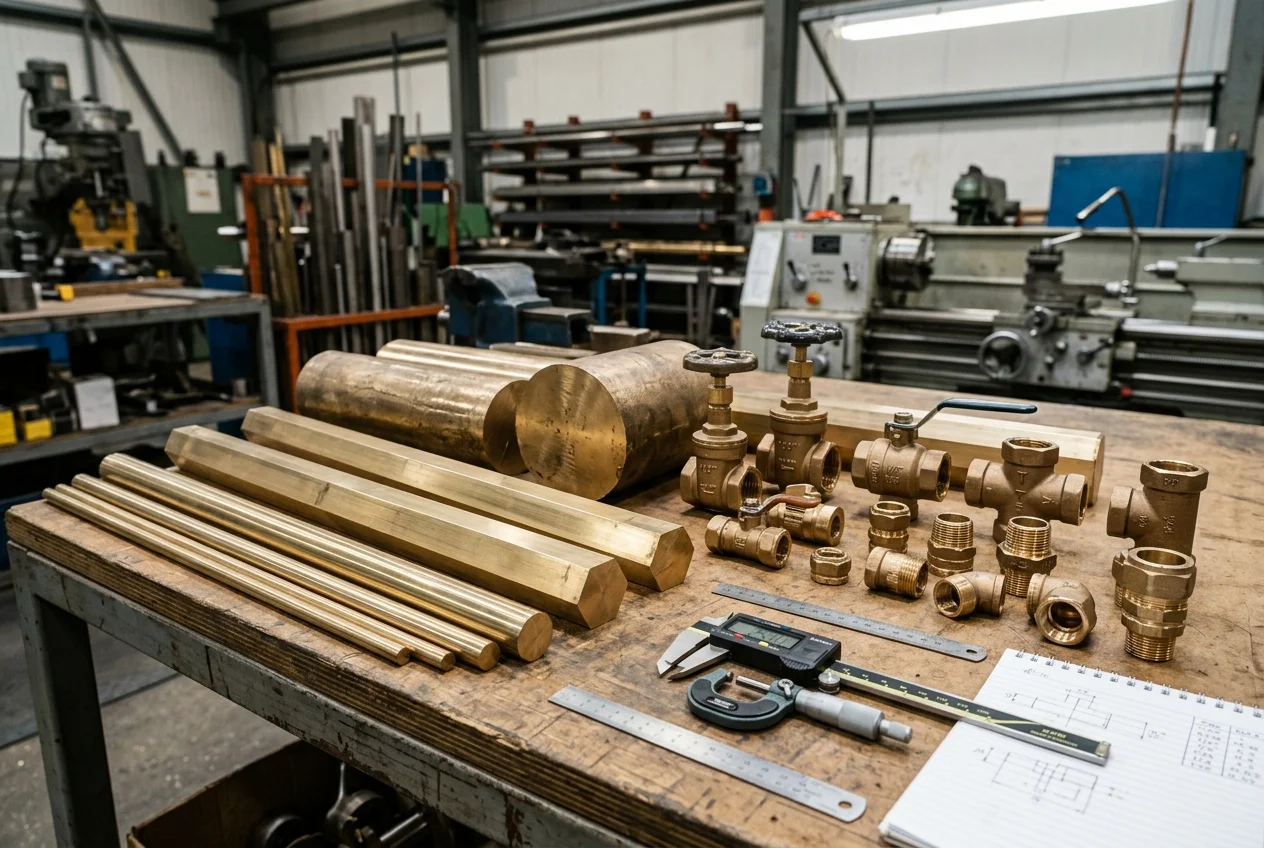
Brass is an alloy composed primarily of copper and zinc, but the addition of secondary elements such as lead, tin, aluminum, silicon, and iron creates distinct metallurgical formulations tailored to specific engineering environments. Choosing the optimal brass alloy ensures maximum mechanical performance, corrosion longevity, and production cost-efficiency.
1. Free-Cutting Brass: CW614N / CZ121 / UNS C36000
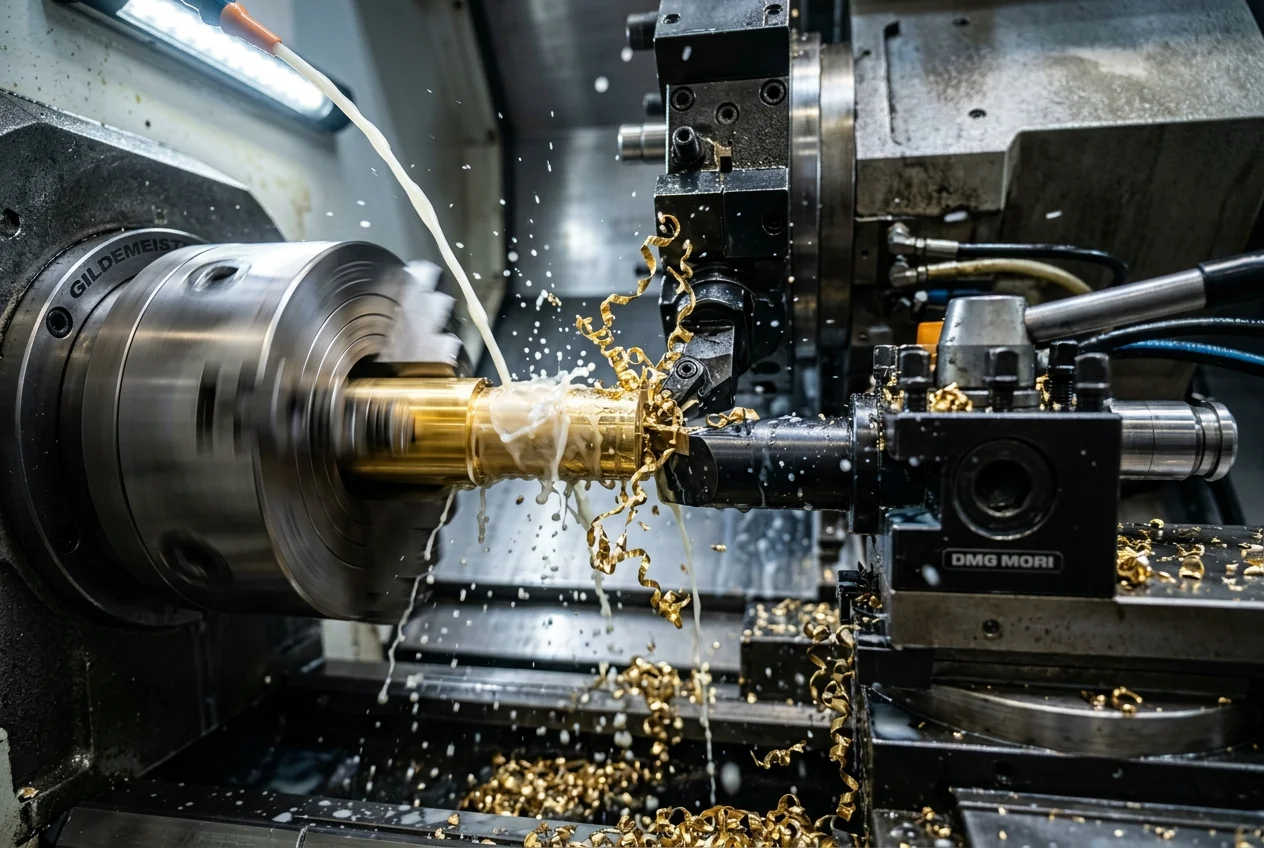
Often referred to as the standard machining brass, CW614N contains approximately 58% Copper, 39% Zinc, and 3% Lead. The finely dispersed microscopic lead particles act as internal chip breakers and natural lubricants during high-speed cutting.
- Best For: Precision threaded fasteners, electrical terminals, knurled inserts, cable glands, and high-volume CNC turned parts.
- Key Benefits: 100% machinability rating, prolonged cutting tool life, clean burr-free threads.
2. Hot Forging Brass: CW617N / CZ122 / UNS C37700
With an optimized copper content (approx. 57% to 59%) and controlled lead distribution, CW617N provides exceptional plastic deformability at elevated forging temperatures (650°C to 750°C) while maintaining good post-forging machinability.
- Best For: High-pressure valve bodies, plumbing manifolds, gas fittings, and heavy-duty pipeline connectors.
- Key Benefits: Pore-free grain structure, high burst pressure resistance, zero porosity leaks.
3. Lead-Free and Eco-Friendly Brass: CW511L / UNS C27450
Driven by strict global health mandates (such as US Safe Drinking Water Act NSF/ANSI 61, California AB 1953, and European RoHS directives), lead-free brass grades restrict lead content to below 0.1% or replace it with bismuth or silicon.
- Best For: Residential potable drinking water systems, commercial beverage dispensers, and medical equipment.
- Key Benefits: Complete compliance with international environmental and health safety regulations.
4. Dezincification-Resistant (DZR) Brass: CW602N / CZ132
In acidic or soft municipal water conditions with high chloride levels, standard brass can suffer from dezincification—a process where zinc selectively leaches out, leaving behind a brittle, porous copper sponge that causes fitting failure. DZR brass incorporates an arsenic inhibitor and undergoes specialized annealing heat treatment to resist dezincification.
- Best For: Underground plumbing fittings, district heating systems, and water utility installations.
- Key Benefits: Passes ISO 6509 dezincification resistance testing, superior structural lifespan in aggressive water.
5. Naval Brass: UNS C46400
Naval brass contains approximately 60% Copper, 39.25% Zinc, and 0.75% Tin. The addition of tin confers outstanding resistance to saltwater corrosion and biological marine fouling.
- Best For: Marine hardware, offshore oil & gas instrumentation, condenser tubes, and boat fittings.
- Key Benefits: High tensile strength, fatigue resistance, and durability in marine atmospheres.
Expert Metallurgy Advice at Jupiter Brass
Our engineering team assists customers in matching their functional application, working pressures, operating temperatures, and regulatory mandates with the exact brass alloy specification. Contact us today for alloy recommendations and sample test coupons.